
Global biomethane market: green gas goes global

CEDIGAZ launches new report and database
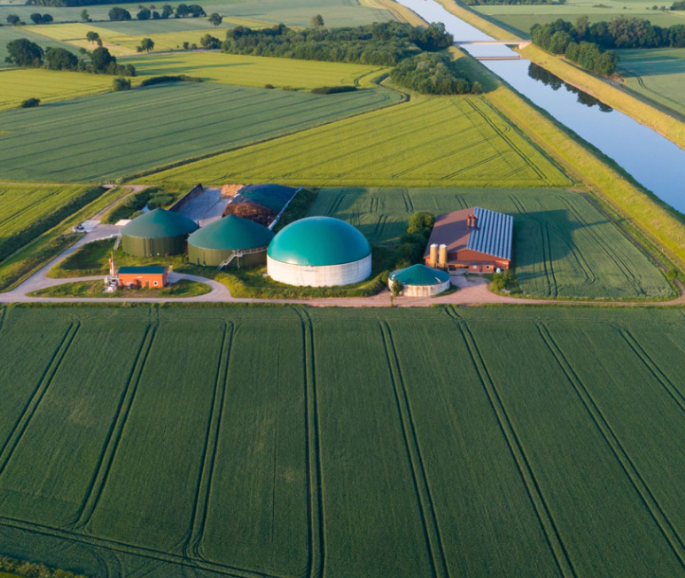
Global biomethane market

The biomethane sector is booming worldwide. There will soon be more than 1,000 biomethane production plants operating in thirty-four countries, up from 720 at year-end 2017. Long centered in Europe, the green gas sector is indisputably going global.

Since 2010, world biomethane production has increased exponentially, reaching three billion cubic meters in 2017. In Europe, biomethane use is spreading across the continent.  There are now nineteen European producing countries, whose output totalled nearly 2 bcm in 2017. The United States is now world leader for the use of biomethane as vehicle fuel, further to its production surge of 2014-2017 and driven by federal and state regulations. The fact that China and India have recently adopted biogas upgrading technology promises to be a game changer. Both countries have set ambitious biomethane production targets and figure as huge emerging markets. In Central and South America, Brazil is taking regulatory steps to exploit its huge potential.

Despite a flurry of projects and rising interest among governments and industry players worldwide, data on this sector are comparatively scarce and sources of information – national, regional or sectoral – are highly dispersed. To fill this void, CEDIGAZ, the International Centre on Natural Gas Information, is launching a new report and database focused on global biomethane markets and production plants. These are valuable tools for policy makers, energy companies, equipment providers or any entity or individual following this rapidly expanding market.

The Impact of New Marine Emissions Regulations on the LNG Market

Changes to the IMO emissions standards will see the global sulphur limit in marine fuel reduced from 3.5% to 0.5% from 2020.

Marine fuel is a huge energy market which is currently dominated by oil products. However, tighter environmental regulations, particularly MARPOL Annex VI, are driving changes in fuel requirements, especially with regards to sulphur emissions, both in the Emission Control Areas (ECAs) around the coasts of North-West Europe and North America, but also globally, particularly as the 0.5% sulphur limit applies globally from January 2020 . LNG has opportunities in this sector as a low-sulphur fuel, although it also faces strong competition from low-sulphur oil products, sulphur scrubbing technology, and potentially from electric vessels. Currently there are known to be around 139 merchant vessels using LNG as a fuel, with a similar number on order. Whilst LNG-fuelled shipping has been slow to take off, it is now growing rapidly, particularly as supply infrastructure coverage has improved significantly in recent years. LNG is likely to become a fuel of choice for newbuilds in many sectors, whilst there may also be some LNG conversions.

Blue Skies and Natural Gas in China

2017 was a key and challenging year for the Chinese gas sector. All indicators point to an acceleration of natural gas penetration in the energy mix and an intensification of gas market reforms to facilitate this expansion.

Boosted by the recovery of Chinese economic growth, the acceleration of coal-to-gas switching policies, and the rebound in the competitiveness of natural gas relative to competing fuels, China’s natural gas consumption reached a record high level. According to the National Development and Reform Commission (NDRC), natural gas consumption rose by 15.3% to 237.3 bcm in 2017. China was the world’s fastest growing gas market: the country alone accounted for a quarter of global growth in gas consumption.