Ten major trends in the European gas market (Part 2)

The EU gas and energy sector is in the midst of a profound transformation driven by decarbonisation, digitalisation and decentralisation. The latest report by Cedigaz analyses in ten key points the evolution of the gas sector and includes forward looking views on new trends in EU gas markets.

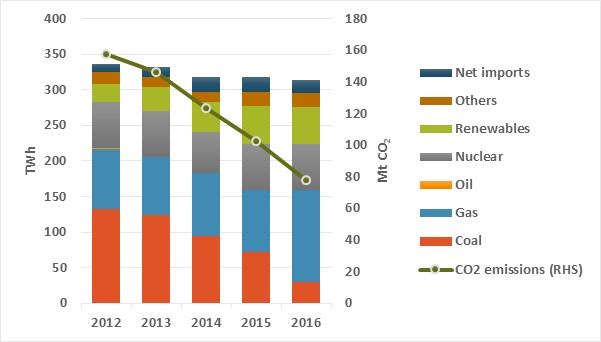
6. Role of gas in the energy transition in the medium term: Natural gas is expected to be a key pillar of the EU energy transition. As the cleanest of all fossil fuels, it allows a quick reduction of the power sector’s emissions thanks to coal-to-gas switching. Moreover, thanks to its flexibility, natural gas is an ideal partner to renewables. Gas-fired power plants are well suited to follow rapid swings in power supply of variable renewables. In the transport sector, the cleanliness of natural gas is a key advantage for improving air quality, a major health and economic issue. In maritime transport, new regulations to reduce sulphur emissions from shipping play a key role in the development of LNG as a marine fuel. Natural gas, if it cannot decarbonise the heating sector, can make an effective contribution to reducing emissions from the sector and, in the long term, can be replaced by renewable gas.

UK power supply & CO2 emissions from power plants


UK power supply & CO2 emissions from power plants

Ten major trends in the European gas market (Part 1)

The EU gas and energy sector is in the midst of a profound transformation driven by decarbonisation, digitalisation and decentralisation. The latest report by Cedigaz analyses in ten key points the evolution of the gas sector and includes forward looking views on new trends in EU gas markets.

1. Decarbonisation: The EU has a high decarbonisation objective. With the ratification of the Paris Agreement in 2016 and the 2030 climate and energy framework, the EU energy mix requires a profound transformation. The legislative process to implement the 2030 goals was initiated with the Energy Union Package in 2015 and subsequently by the Energy Security Package and the Clean Energy Package. Already, Europe’s energy system is moving fast from a fossil-fuelled energy system to a low-carbon, more digital and consumer centric system. In this new context, the role of gas in the clean energy transition needs to be defined.

Post COP21- What does the future hold for gas in Southeast Asia?

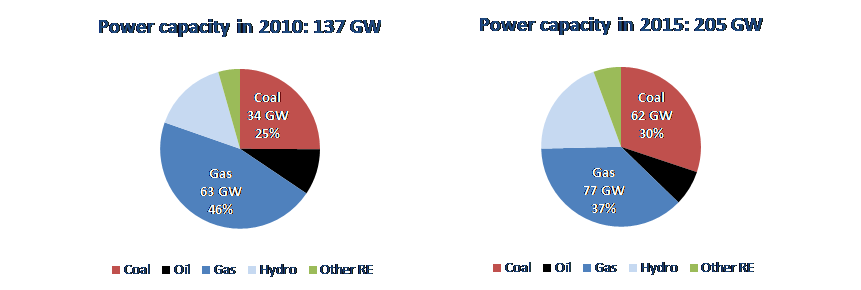
Today, Southeast Asia is again in front of great changes in its energy mix. To meet surging demand, the region must secure a reliable and affordable energy supply. It must also limit the environmental pressures associated with energy consumption. The power sector is fundamental to these changes. Driven by rapid economic growth, demographic and urbanization trends, and the extension of access to modern electricity to larger segments of rural populations, electricity demand is expected to almost triple by 2040. Power generation capacity in Southeast AsiaWhile natural gas still dominates the regional electricity mix, a shift to coal has been observed since the end of the 2000s driven by the availability of coal in the region and its lower cost than competing fuels. In the short to medium term, this trend is going to continue: there are around 35 GW of coal-based capacity under construction in the region, most of them to be completed by  2020. In addition, there is a huge number of permitted and announced coal-fired power plants in the pipeline, which means that the dominance of coal may continue well after 2020. In the World Energy Outlook 2016 of the International Energy Agency (New Policies Scenario), coal becomes the first source of electricity generation by 2040, despite the increase in electricity generation from renewables. In contrast, the contribution of gas to electricity generation falls by 2040.