The Global LNG Market in 2015: Q1 First Estimates and Outlook

In 2014, the LNG year was somehow a replica of the previous one as it was characterized by rising Asian demand, decreasing European demand and a high price differential between the two biggest LNG markets. In 2015, as the trade data of Q1 show, the dynamics are likely to be different. First data show that the pressure on the Asian market is falling due to lower demand and growing production in the Pacific basin. In addition, gross imports are increasing in Europe while the re-export business is collapsing. Elsewhere in the world, the LNG industry continues to develop, as new projects keep coming on stream.

Read below or   Download PDF
CEDIGAZ’s Monthly LNG Trade Bulletin of May 2015

This blog post analyses the main findings of the LNG Monthly Bulletin. The LNG Monthly Bulletin provides monthly traded volumes and prices by importer and country of origin, it is part of the LNG Service by Cedigaz.

Asian LNG market is easing

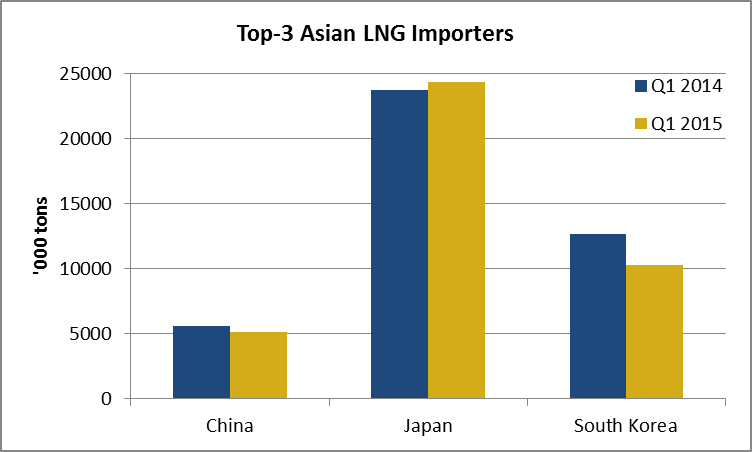
Asian LNG market is easingIn Asia, LNG purchases of the regional top-3 buyers (Japan, South Korea and China) decreased by 5.5% year-on-year in the first quarter of 2015. Imports fell from 42 million tons to 39.7 million tons, pulled by a 19% drop in South Korea (-2.4 million tons) where higher inventories and another mild winter pushed imports down. Lower demand for natural gas was highlighted by the drop in KOGAS’ domestic sales (-7.6%), mainly due to a fall in sales to the power sector (-14.3%).

In China, imports declined by 8.6% from 5.6 million tons to 5.1 million tons while in Japan, LNG purchases grew slightly from 23.7 million tons in Q1 2014 to 24.3 million tons in Q1 2015, even though mild temperatures cut total power demand.

2014: A SECOND YEAR OF MODERATE GROWTH OF GLOBAL GAS ACTIVITY

2014 has been a very mixed year for natural gas, according to the First Estimates 2014 released by the International Association CEDIGAZ today. For the second consecutive year, gas demand slowed down in 2014, with subdued activity in the global gas industry at all stages of the chain.

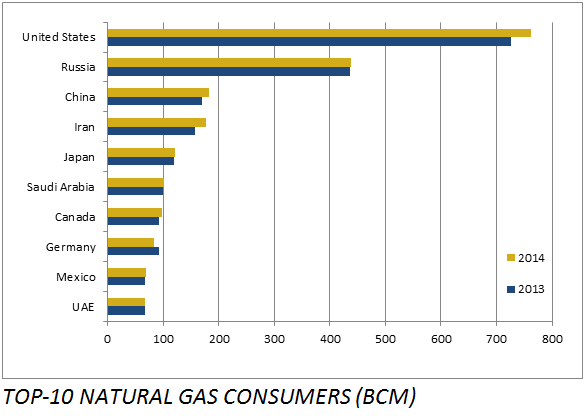
Top1 consumming countriesGlobal natural gas consumption (including storage variations) was sluggish in 2014 and remained at a quite similar level than in 2013. This can be explained by increased competition between energies, especially coal, the economic slowdown (Europe, China, Russia…), geopolitical turmoil (Russia-Ukraine conflict) and the mild weather conditions which negatively impacted the expansion of gas demand (Europe, Asia). The global consumption trend showed regional disparities. Natural gas demand in North America and the Middle East continued to register strong expansion, but the growth in Asia slowed down, while consumption in the Commonwealth of Independent States (CIS) and Europe declined dramatically. Plummeting consumption in Europe (- 10%) in particular weighed significantly on the overall trend.